





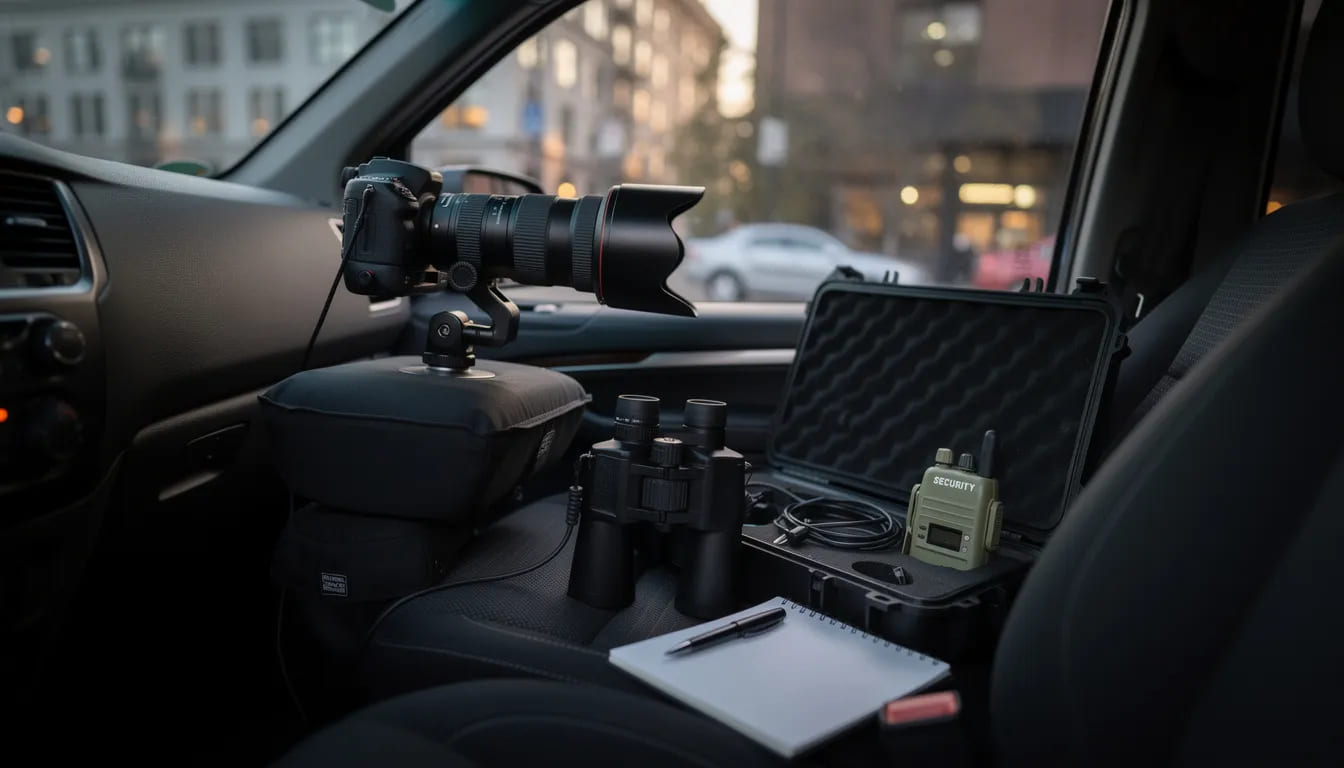
Workers Comp Surveillance - How OC Private Investigators Protects Insurers From Fraud While Supporting Legitimate Claims

Workers comp surveillance is standard practice in California, especially in Orange County, to test the credibility of claimed restrictions through covert video, social media monitoring, and behavioral analysis. OC Private Investigators uses federal-level behavioral analysis and subrosa surveillance to detect fraud while supporting legitimate injured workers through objective evidence.
Desktop investigations alone detect only 20% of fraud, compared to 60–90% when combined with targeted field surveillance. OCPI advantages include David S. Boone—the only Paul Ekman Certified Trainer in private investigation—24–48 hour deployment across Orange County, and court-defensible video with expert testimony capability. Every case receives direct principal oversight with no outsourcing to 1099 contractors, ensuring consistent quality for SIU units and defense counsel.
What Is Workers Comp Surveillance And Why It Matters In 2026
Workers compensation surveillance refers to the systematic process of monitoring claimants to verify whether their reported injuries and physical limitations align with observable daily activities. From the insurer and defense perspective, surveillance serves as an objective tool to confirm claim legitimacy or identify discrepancies that warrant further investigation.
The term "workers comp surveillance" typically encompasses three interconnected methods: subrosa observation (covert video and photo documentation), digital review of social media accounts and public records, and behavioral analysis during recorded statements or interviews. When coordinated effectively, these methods produce a comprehensive picture of a claimant's actual physical capabilities versus their documented restrictions.
The business case for surveillance is compelling. Insurance fraud costs the U.S. economy approximately $308 billion annually, with workers compensation fraud representing a significant portion of that loss. This fraud directly impacts the average American family, adding $400–700 per year to insurance premiums across all lines of coverage.
In 2024–2026, California carriers increasingly rely on surveillance in disputed TTD (temporary total disability) and AOE/COE (arising out of employment / course of employment) cases where medical restrictions remain vague or inconsistent. Insurers recognize that protecting against false claims also protects legitimate injured workers by preserving system resources for those who genuinely need them.
OC Private Investigators operates from Mission Viejo as a boutique firm focused on insurance defense surveillance throughout Orange County, with coverage extending into Los Angeles and San Diego for regional carriers and defense firms.
Why Insurance Carriers And Defense Counsel Use Workers Comp Surveillance
Insurance companies deploy surveillance to control loss costs, shorten claim duration, and strengthen their litigation posture before WCAB (Workers' Compensation Appeals Board) hearings or settlement negotiations. When claims adjusters and SIU managers can present objective footage of claimant activities, they negotiate from a position of documented fact rather than speculation.
Specific triggers for surveillance include:
- Inconsistent medical reports or restrictions that expand unexpectedly
- Red flags identified by adjusters during claims handling
- Prior workers compensation claim history in ISO databases
- Tips from co workers or supervisors about off-the-job activities
- PQME (Panel Qualified Medical Evaluator) disputes where claimant behavior contradicts evaluated impairments
Surveillance supports WCAB hearings by providing time-stamped, geolocation-verified footage that defense attorneys can authenticate and present as evidence. This surveillance evidence transforms subjective disputes about functional capacity into objective demonstrations of what a claimant can or cannot do.
Proper surveillance also ensures legitimate injured workers in Irvine, Santa Ana, or Anaheim receive appropriate benefits. When fraud is detected and addressed, system resources remain available for honest claimants rather than being depleted by exaggerated or fabricated injury claims.
OCPI focuses on producing court-defensible evidence with clear chain of custody, precise date/time stamps, and detailed narrative reports aligned with California legal standards. This approach gives defense counsel confidence when presenting findings at deposition or trial.
OCPI partners with SIU units and defense attorneys to time surveillance around key claim milestones—before depositions, ahead of QME examinations, or during the lead-up to settlement conferences when footage can materially impact case valuation.
Core Workers Comp Surveillance Methods Used In Southern California
This section breaks down the main surveillance tactics carriers rely on in 2026. Rather than depending on any single method, effective investigations integrate traditional subrosa, digital intelligence, and behavioral analysis to build comprehensive case documentation.
Each method serves a specific purpose and works best under particular circumstances. OCPI executes these methods across Orange County cities including Mission Viejo, Irvine, Santa Ana, Newport Beach, Anaheim, and Costa Mesa.
Field / Physical Surveillance (Subrosa)
Subrosa surveillance involves discreet, real-world observation and video recording of a claimant's daily activities in public spaces or areas visible from public property. Investigators position themselves to capture activities that either confirm or contradict the limitations set by treating physicians.
Typical deployments include early-morning departures from homes in Mission Viejo, school drop-offs in Costa Mesa, weekend activities in Newport Beach, or side jobs in industrial areas of Santa Ana. Investigators plan coverage windows based on known medical restrictions—no lifting over 10 pounds, no prolonged standing, no overhead work—to obtain footage specifically relevant to disputed limitations.
Private investigators remain on public property throughout operations. They never trespass on private property, and they document everything with time-coded HD video surveillance and stills for litigation use. Every frame includes metadata that defense attorneys need to authenticate footage in court.
OCPI uses a boutique, non-subcontracted team for all field operations. SIU managers know exactly who is handling their case—no 1099 contractors or outsourced surveillance companies that introduce quality control risks.
Social Media And Open-Source Monitoring
Social media monitoring has become essential to workers comp investigator tactics. OCPI reviews public posts on platforms like Facebook, Instagram, TikTok, and LinkedIn for evidence inconsistent with claimed restrictions.
Concrete examples appear regularly in Orange County cases. A claimant on TTD for a "crippling" back injury posts about a weekend hike in Laguna Beach. Another posts gym selfies showing heavy lifting at a CrossFit facility in Costa Mesa. Family members tag claimants in vacation photos that contradict stated mobility limitations.
Open-source databases also reveal patterns that physical surveillance might miss. County property records show claimants operating rental businesses while claiming total disability. Business licenses expose side employment during periods of supposedly crippling injuries. These digital findings often become the foundation for targeted field surveillance.
OCPI approaches social media methodically, documenting public posts without engaging in deception or account impersonation. All evidence remains admissible under California rules because it comes from publicly accessible information that claimants voluntarily shared.
Behavioral Analysis During Statements And Interviews
Beyond what claimants do, behavioral analysis examines how they communicate. David S. Boone's Paul Ekman certification allows OCPI to decode microexpressions, body language shifts, and verbal patterns that indicate deception or exaggeration during recorded statements.
The 5-Channel Communication System evaluates five simultaneous data streams: facial expressions (including microexpressions lasting 1/25th of a second), vocal characteristics (pitch, pace, hesitation patterns), language patterns (evasive pronouns, distancing language), physiological indicators (blink rate, perspiration, breathing changes), and body language (posture shifts, barrier gestures, illustrators).
This science-based approach identifies discrepancies between claimed suffering and observable emotional presentation. For example, a claimant describing "unbearable" pain while displaying genuine smiles and relaxed posture sends conflicting signals that warrant deeper investigation.
Behavioral findings don't stand alone—they guide where to focus physical surveillance and which aspects of a claim deserve closer scrutiny. When combined with subrosa footage and social media evidence, behavioral indicators help SIU managers build comprehensive fraud cases or confidently close legitimate claims.
Real-World Workers Comp Surveillance Success In Orange County
While case specifics remain confidential to protect carrier and claimant privacy, OCPI regularly documents activity patterns that directly contradict documented medical restrictions across Orange County jurisdictions.
Common surveillance findings include:
Physical Capability Discrepancies
Claimants with "total lifting restrictions" captured loading furniture into pickup trucks, carrying children, or moving landscaping materials. Video timestamps and geolocation data confirm activities occurred during periods of claimed total disability.
Unreported Employment
Claimants operating businesses, performing construction work, or engaging in heavy labor while receiving TTD benefits. Documentation includes footage at job sites, business records cross-referenced with surveillance dates, and social media posts advertising services.
Recreational Activity Inconsistent With Restrictions
Participation in sports leagues, gym workouts, hiking, or other activities requiring physical capabilities that exceed claimed limitations. Footage shows specific movements—squatting, overhead reaching, sustained standing—that treating physicians restricted.
Mechanism-of-Injury Contradictions
Surveillance revealing pre-existing conditions or activities more likely to cause reported injuries than workplace incidents. This evidence supports AOE/COE disputes where carriers question whether injuries actually arose from employment.
Behavioral Inconsistencies During Statements
Analysis of recorded statements revealing deception indicators when claimants describe injury mechanisms or current limitations. Microexpression analysis identifies emotional leakage that contradicts verbal statements about pain, disability, or incident details.
Each documented case strengthens an insurer's position during settlement negotiations or WCAB proceedings. Defense attorneys present objective evidence rather than subjective opinions, shifting burden of proof back to claimants who must explain documented contradictions.
OCPI's subrosa surveillance services and AOE/COE investigations support carriers throughout Orange County with rapid deployment and court-ready evidence packages.
Cost Structure For Workers Comp Surveillance Services
Surveillance pricing varies by investigation complexity, geographic scope, and duration. Most workers comp surveillance falls into predictable cost ranges that SIU managers can budget and approve quickly.
Short-Duration Field Surveillance
Single-day deployments with 4–8 hours of coverage: $1,500 to $3,500. Best for confirming specific activities or capturing weekend behavior patterns.
Multi-Day Surveillance Operations
Extended investigations spanning 3–5 days to establish activity patterns: $4,500 to $12,000. Appropriate for high-exposure claims where comprehensive documentation justifies investment.
Social Media And Digital Intelligence
Comprehensive open-source monitoring and database research: $800 to $2,200. Often conducted before field surveillance to identify optimal coverage windows.
Behavioral Analysis And Statement Review
Expert analysis of recorded statements using FACS methodology: $1,200 to $2,500. Provides scientific assessment of deception indicators to guide investigation strategy.
Comprehensive Investigation Packages
Combined subrosa, social media, and behavioral analysis with expert testimony preparation: $8,000 to $45,000. Reserved for catastrophic claims or high-stakes litigation where thorough documentation is essential.
OCPI offers 24–48 hour deployment across Orange County (Mission Viejo, Irvine, Santa Ana, Newport Beach, Anaheim, Costa Mesa) with coordinated scheduling into Los Angeles and San Diego for regional matters.
Surveillance is not reserved only for large-loss claims. Even moderate TTD workers comp cases justify targeted, short-duration subrosa when red flags exist. A single photo or brief video sequence showing activity inconsistent with restrictions can shift settlement negotiations substantially.
Legal Limits And Best Practices For Workers Comp Surveillance In California
Effective surveillance requires strict adherence to California privacy and evidence rules. Investigators who cross legal lines potentially compromise their own cases and expose carriers to liability.
What investigators can do:
- Record from public places including streets, sidewalks, and parking lots
- Capture activity visible from those public areas
- Document public interactions and observable physical capabilities
- Monitor public social media accounts without deception
- Interview willing witnesses
What investigators cannot do:
- Trespass on private property to obtain footage
- Peer through closed blinds or windows
- Install illegal tracking devices on vehicles
- Record confidential communications without consent
- Engage in entrapment or manufactured scenarios
California's two-party consent rule governs recording of confidential conversations. OCPI operates within these boundaries by limiting audio recording to non-confidential settings or obtaining appropriate consent.
OCPI reports avoid inflammatory language and focus on objective, observable behaviors. Phrases like "the claimant appeared to be faking" have no place in professional surveillance documentation. Instead, reports describe specific actions: "Subject lifted a 40-pound bag of mulch from ground level to waist height without visible difficulty at 10:47 AM." This objective approach gives defense attorneys confidence when presenting findings at WCAB.
Chain-of-custody protocols safeguard file integrity from capture through court presentation. OCPI prepares investigators for deposition or trial testimony to authenticate video evidence and explain observation methodology under cross-examination.
How OC Private Investigators Delivers Court-Defensible Workers Comp Surveillance
Most surveillance companies operate on volume, outsourcing field work to networks of 1099 contractors with variable training and quality standards. This model introduces risk: inconsistent evidence handling, gaps in documentation, and investigators unprepared for deposition testimony.
OCPI operates as a boutique firm with a fundamentally different approach. Every workers comp surveillance assignment receives direct oversight from David S. Boone, whose credentials include 20+ years with the LA County Sheriff's Department, Paul Ekman certification in behavioral analysis, and FACS training aligned with federal agency standards.
OCPI's end-to-end workflow includes:
- Referral intake – Understanding claim specifics, medical restrictions, and litigation timeline
- Case planning – Identifying optimal surveillance windows and methods
- Pre-surveillance intelligence – Social media review, address verification, known associates
- Field operations – Principal-supervised subrosa with HD video documentation
- Evidence review – Behavioral analysis of captured footage and statements
- Reporting – Detailed narrative aligned with claimed restrictions and legal standards
Standard deliverables include HD video files, still image sets, detailed narrative reports, activity timelines, and behavioral observations tied specifically to medical documentation. Reports are formatted for easy integration into claim systems and litigation files.
For defense attorneys, OCPI provides testimony preparation support, expert explanation of behavioral cues observed during statements or surveillance, and clear articulation of how footage aligns with or contradicts medical records.
SIU managers, claims directors, and defense counsel in Orange County, Los Angeles, and San Diego can contact OC Private Investigators for a free consultation on time-sensitive workers comp surveillance assignments. OCPI deploys within 24–48 hours to engage emerging fraud opportunities before claimants adjust their routines.
FAQ: Workers Comp Surveillance For Insurers And Defense Counsel
How quickly can OC Private Investigators start surveillance on a new workers' comp file?
OCPI routinely deploys within 24–48 hours anywhere in Orange County, with rapid scheduling into Los Angeles and San Diego when regional coverage is needed. Faster engagement allows investigators to capture early post-injury behavior, often before claimants become aware they might be under observation and adjust their daily activities accordingly. For high-severity or high-exposure claims, same-day starts can sometimes be arranged through direct coordination with our principal investigator.
What types of workers comp claims benefit most from surveillance?
Claims that benefit most include long-term TTD cases where restrictions persist without clear medical progression, soft-tissue injuries with vague or subjective limitations, repetitive-strain claims that are difficult to verify objectively, and disputed AOE/COE injuries where mechanism of injury remains unclear. Catastrophic claims also warrant surveillance when carriers need to validate level of care requirements such as attendant care or home modifications. Any file with red flags, inconsistent reporting, or tips from co workers is a candidate for targeted, short-duration surveillance to safeguard against potentially exaggerated claims.
How is surveillance evidence shared with our SIU and legal teams?
OCPI provides secure digital delivery of video, stills, and reports formatted for easy upload into claim management and litigation systems. Materials are organized by date, time, and location, with clear activity descriptions cross-referenced to claimed restrictions and medical records. Report structure can be tailored to carrier or law firm preferences for smoother integration into existing SIU workflows and case management processes.
Can OC Private Investigators testify about surveillance findings at WCAB or in civil court?
Yes. OCPI investigators, including David S. Boone, are prepared to testify about observations, surveillance methodology, and chain of custody. Testimony can include factual description of documented activities and, when requested, expert explanation of behavioral indicators observed during recorded statements or field surveillance. OCPI's focus on creating evidence that withstands cross-examination ensures that surveillance footage supports rather than undermines defense strategy.
Do you offer training for SIU teams on surveillance and behavioral red flags?
OCPI offers behavioral analysis and fraud-detection training for insurance SIU units and defense firms based on federal-level methodologies. Training topics include recognizing deception across the 5-Channel Communication System, identifying claim red flags that warrant field investigation, and optimizing referrals for subrosa surveillance. Sessions can be held on-site in Orange County or delivered virtually for regional SIU teams across California. Contact us for a free consultation today to discuss training options for your risk management team.